
Behind the Scenes
A 100K-Download App Sat Quiet for Two Years. After a 13-Day Revamp, It Started Earning Again
By the POMODIARY Team · · 6 min read
| Date | Region | Product | Amount |
|---|---|---|---|
| Oct 7 | Japan | Pomodoro Diary Premium (monthly) | JPY 360 |
| Sep 27 | Taiwan | Pomodoro Diary Premium (monthly) | TWD 67 |
| Sep 25 | Taiwan | Pomodoro Diary Premium (monthly) | TWD 67 |
The three most recent orders in the Google Play Console.
On the morning of October 7, another order showed up in the Google Play Console: a user in Japan, buying the monthly membership for Pomodoro Diary. Scrolling up, there were two more, on September 25 and 27, both from Taiwan.
The amounts are small. For Pomodoro Diary, though, this was something that had rarely happened in a year or two. Looking at those three rows felt great.
This post was first written in Chinese for the developer's WeChat Official Account (a blog-style publishing channel inside the WeChat messaging app) and has been adapted for English readers. The app's Chinese name is 番茄打卡.
An old house with people still living in it
Pomodoro Diary is an Android app I made a few years ago: a Pomodoro timer plus habit check-ins. After each focus session you can write a short note, and over time the notes add up to a diary of your time.
It has stayed alive on Google Play the whole time: 100K+ downloads, a 4.7 rating, close to 500 reviews, with most users in Taiwan, Hong Kong and Japan.
For the past year or two my energy went into other products. The app was basically in maintenance mode, and orders came in only now and then. People kept using it and the rating held up, but it had not had a proper update in a long time. It was like an old house: people still lived there, but it had not been renovated in ages.
The revamp: 13 days, 53 PRs
On July 19 this year I decided to renovate it. From July 19 to 31, I merged 53 PRs in 13 days and shipped more than ten releases in two weeks. The work came down to four things.
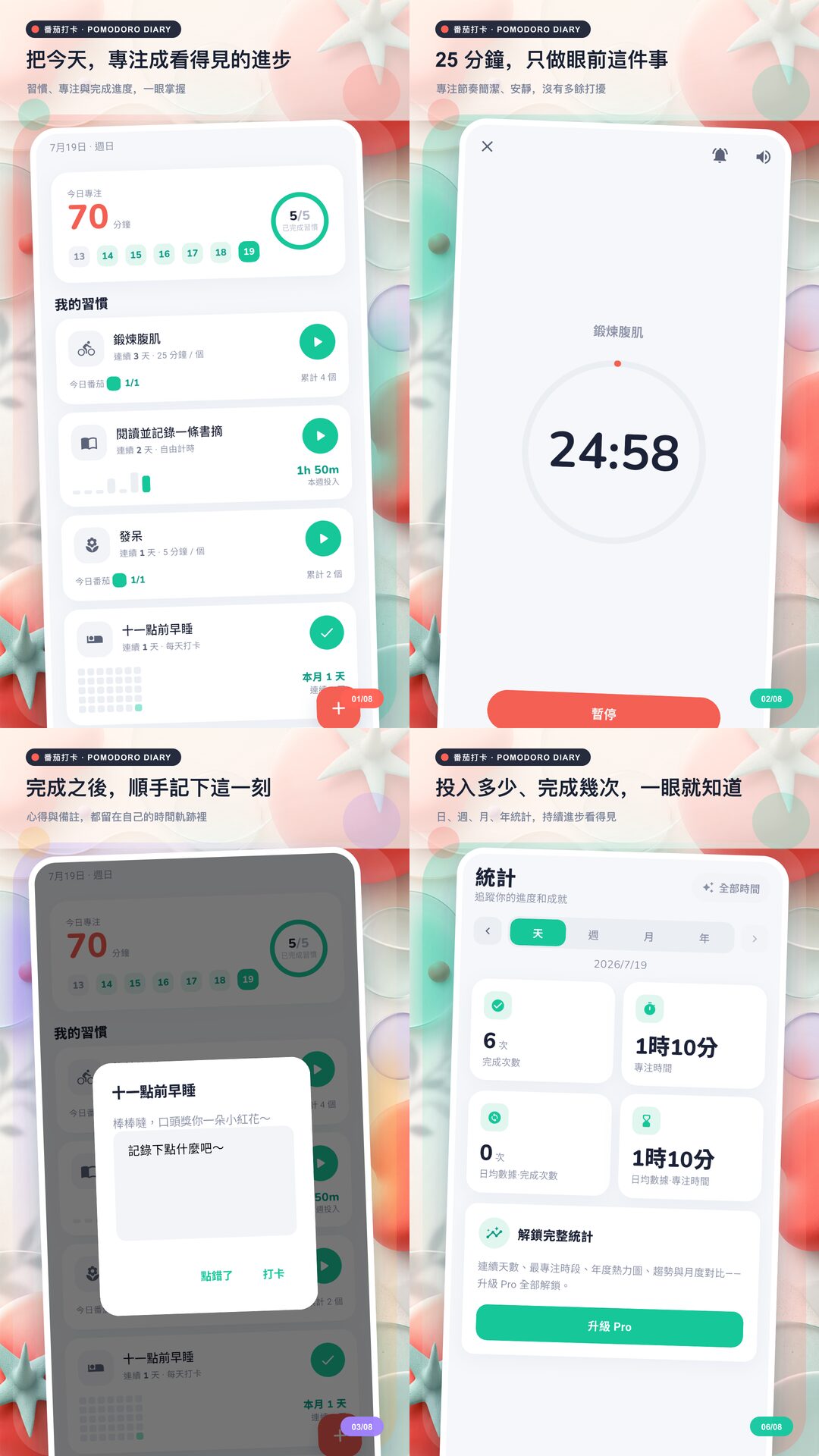
First, a simpler interface. The old UI had too many features piled on top of each other, so I rebuilt it from scratch: one screen does one thing, the check-in button sits in the most prominent spot, and white space replaces decoration. The most common flows (adding a task, editing a task, writing a note after finishing) were all redesigned and feel much lighter than before. The visuals follow one unified design system, dark mode came along with it, and the home-screen widgets were redrawn in the same style.
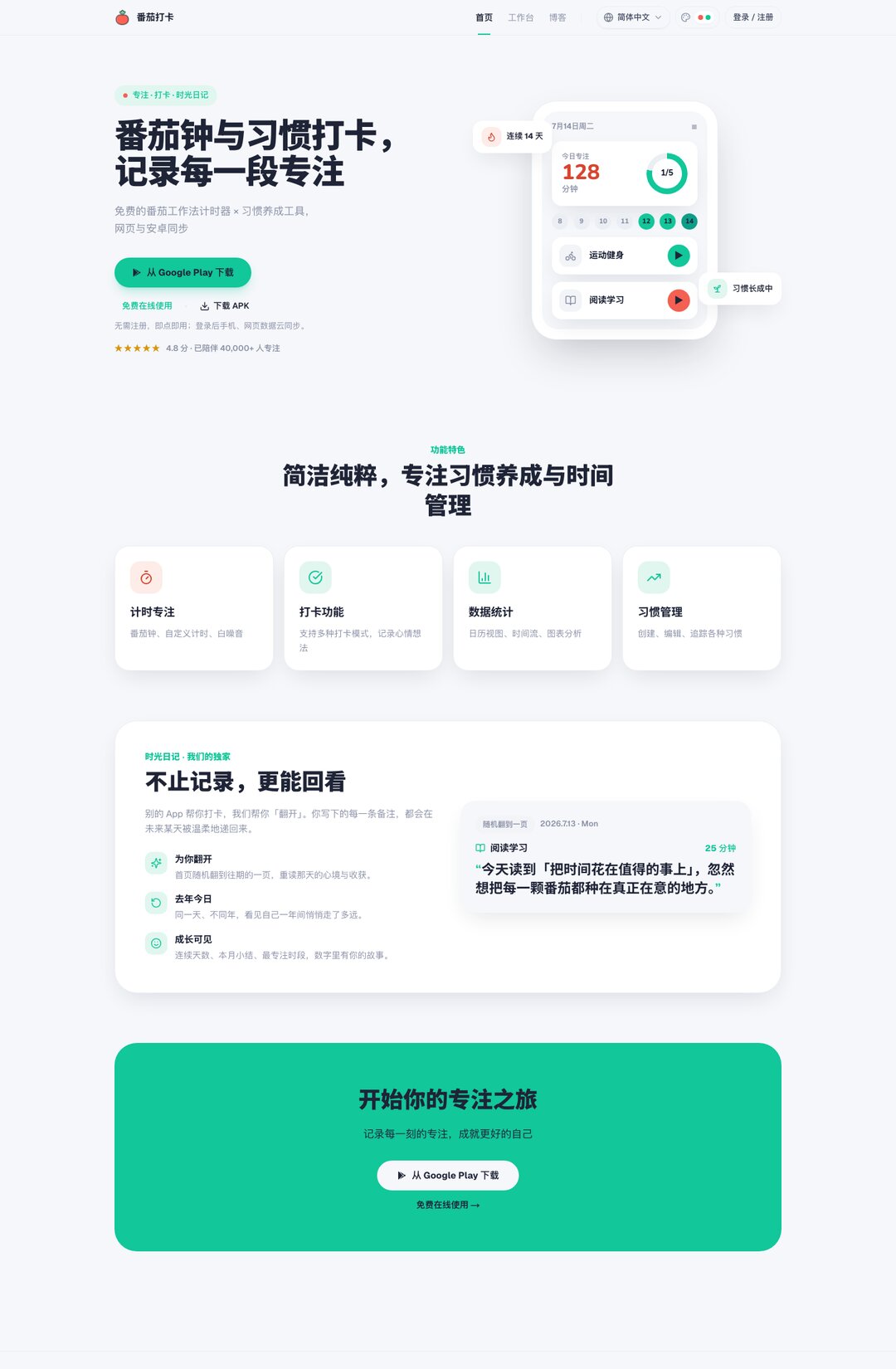
Second, one membership tier became three. Before, there was only a lifetime purchase, which is a fairly high bar. I added monthly and yearly plans: USD 1.99 per month, USD 14.99 per year, or USD 29.99 for lifetime. All three recent orders were monthly. Lower the bar, and people who want to try it first show up.
Third, a pass over the foundations. Cloud sync moved to a more reliable merge strategy, so data on different devices no longer overwrites each other. I added WebDAV backup and full export, so your data stays in your hands. The app now uses the latest Play Billing 8 and targets Android 16, and subscription status is verified on the server. The release process became a script: one command builds and uploads. On the web side, I filled in SEO and structured data for five languages, added multilingual content management, and wrote about ten multilingual blog posts.
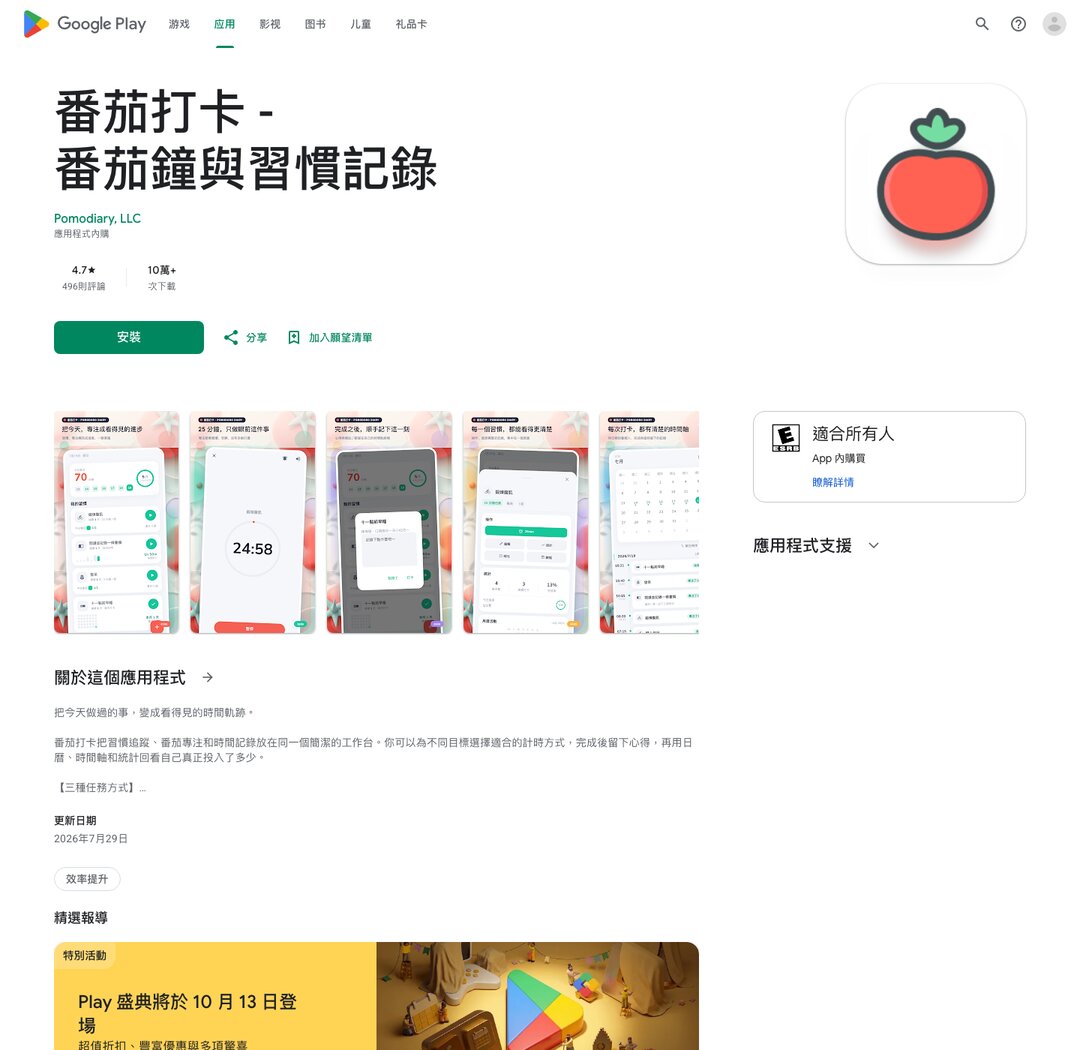
Fourth, a new store listing. In mid-September I redid the Google Play listing in six languages, with eight screenshots per language. Every screenshot was captured from the real app running in an emulator, not from design mockups.
Plus a long list of smaller improvements:
- You can use it without signing up. After you sign in, your phone and the web version sync automatically, and local data stays available offline.
- Full localization in five languages, end to end: pages, emails, sign-in and password recovery all follow the user's language, and every release automatically checks that translations are complete.
- Each language has its own social sharing image, and the site is now connected to Naver, the Korean search engine.
- A design system called PomoDesign came out of the work. Android, iOS and the web share the same colors, type sizes and components.
- Translation resources shrank by 68%, so the install package is lighter.
- Blog posts on topics such as the brain dump method, streak-based habit chains and the Lyubishchev time-tracking method, each in four to five languages.
Then, on September 25, the first order came in.
Why I put monetization on Google Play
For this revamp, I deliberately made Google Play the center of monetization. The reasons are practical.
It collects money from the whole world for you. Users in Taiwan pay in Taiwan dollars and users in Japan pay in yen. I do not deal with exchange rates, local taxes or invoices; at the end of the month Google pays out in US dollars. Play lets you set prices separately for 173 regions. I only fill in a base price and it works out the rest. For someone building products alone, never having to touch payment collection, currency conversion or tax matters far more than the exact size of the commission.
It handles subscriptions end to end. Renewals, cancellations, refunds and restoring purchases all live inside Play's system. On my side I only verify receipts and grant membership.
The commission is just 15%. For developers earning under one million US dollars a year, Google takes only 15%. The rules are clear and there are no surprises.
Most important, the existing user base is already there. 100K+ downloads, close to 500 reviews and a 4.7 rating are the foundations of the old house. The revamp worked because long-time users open the app every day. I was not starting from zero.
How users reacted
During the revamp, a user in Taiwan left a comment in the Play reviews, and we went back and forth over email a few times. Once the problem was solved, she changed her rating to five stars and wrote that the development team was very responsible. For an app with no major update in a year or two, users still wanting to talk in the review section says a lot about the value of the old house.
The direction is right
Three monthly orders are small money, and I am not going to call it a milestone. What they show is that the path works, and the next steps are already under way. In early October I rebuilt the iOS version to match Android: native bridging, the three membership tiers, widgets and Dynamic Island support are all in line, Sign in with Apple and Google sign-in were added, and it is being prepared for the App Store. I also finished a round of fixes based on feedback from users in Japan on the day I wrote this.
Renovating an old house costs much less than building a new one, and the residents are already there. For an older product that still has users, my current view is: renovate first, then talk about new features.
For the web and Android versions, see the Pomodoro Diary project page.
Keep reading
- How to Build Habits with Pomodoro Sessions and Daily Check-Ins
A practical system for turning focus sessions into lasting habits: designing goals, tracking time per goal, using streaks wisely and reviewing each week.
- Pomodoro Interval Variations: 25/5, 50/10, 52/17 and 90-Minute Blocks
Compare popular focus intervals, from classic 25/5 to 90-minute blocks, learn which suits each type of task, and borrow our example daily schedules.
- The Pomodoro Technique: A Complete, Practical Guide
How the Pomodoro Technique really works: its origins, the 25/5 cycle, long breaks, handling interruptions, estimating tasks and the mistakes to avoid.